
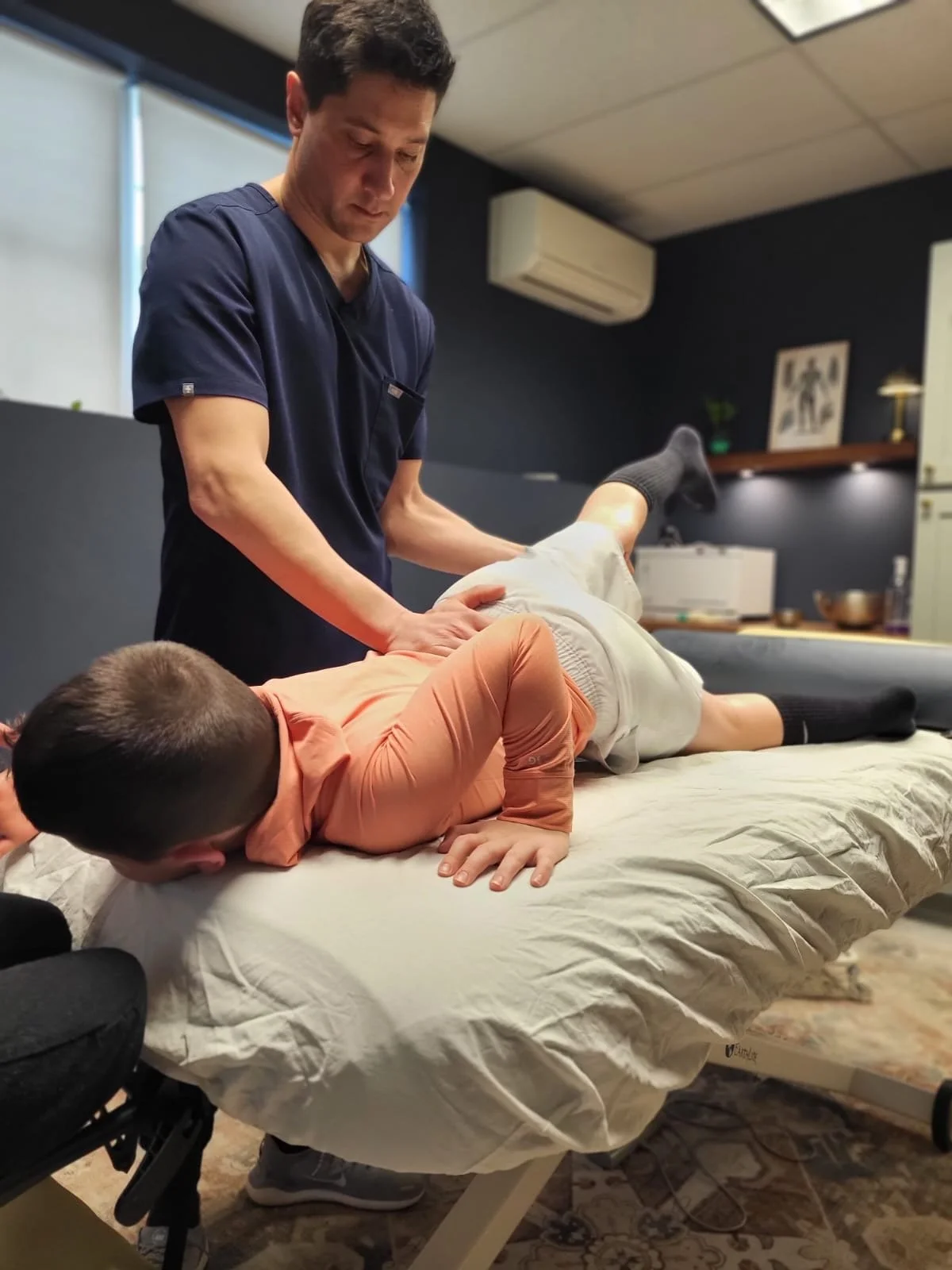
Manual Therapy
Hands-on care used to reduce sensitivity, improve comfort, and support lasting movement change.
Manual therapy at Evolve is used as a clinical tool to help your body feel safe enough to move, load, and adapt again.
This approach is often integrated into the Pain to Performance Pathway, but can also be booked independently when appropriate.
This is not traditional massage
Hands-on care used to reduce sensitivity, improve comfort, and support lasting movement change.
Many people think of massage as something that “loosens tight muscles” or “breaks up knots.” Modern pain science shows that’s not how lasting change occurs.
Here, manual therapy is used to:
Calm nervous system sensitivity
Improve comfort and movement tolerance
Create the right conditions for learning and adaptation
Help you feel safe enough to move confidently again
The goal is not temporary relief. The goal is to make movement possible and productive.
How manual therapy fits into the bigger picture
Most people don’t need more time on the table. They need the right combination of hands-on care and progressive movement.
That’s why manual therapy is frequently combined with strength and movement work as part of the Pain to Performance Pathway.
When used this way, manual therapy becomes far more effective because it is immediately reinforced through movement and loading.
Relief is helpful — but what you do after relief is what creates change.
When booking manual therapy alone makes sense
You may benefit from a bodywork session if you:
Are experiencing a flare-up and need help calming symptoms
Want help restoring comfort before returning to activity
Need hands-on care to support your training or recovery
Prefer a session focused primarily on manual therapy
Even in these sessions, you can expect guidance on how to maintain improvements through movement.
What to expect
Each session includes:
A brief check-in and movement assessment
Targeted hands-on care based on what your body needs that day
Simple movement or loading suggestions to help changes last
This is an active, engaged process — not passive treatment.
Looking for more than short-term relief?
If you find yourself needing manual therapy repeatedly for the same issue, the Pain to Performance Pathway may be a better fit. This structured approach combines manual therapy and movement to create longer-lasting change.